
A shiny badge doesn’t always mean a business earned it.
Your business gets an unexpected “you won” email—but there’s a catch: payment. Award mills use this pitch to sell the appearance of recognition.
Quick Takeaway: An award should tell you something about a business—not just that someone bought a plaque.
What Is an Award Mill, anyway?
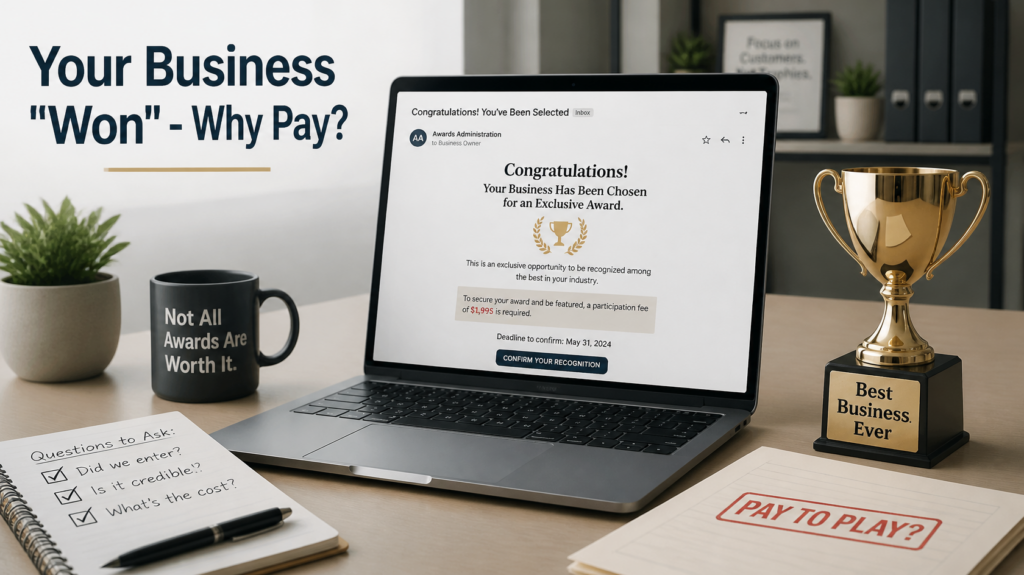
An award mill sells the appearance of recognition without a clear process for choosing winners. The pitch usually goes like this:
- Congratulations—you’ve won!
- Pay for your plaque, badge, or promotional package.
- The award company gets paid. You get something that looks impressive.
The Better Business Bureau lists unsolicited winner notices, unclear judging, payment requirements, and suspicious links as warning signs. BBB: How to spot and avoid vanity awards
The packaging can vary. Watch for:
- “You won!” offers that quickly turn into a sales pitch.
- Names and websites designed to look like established award programs.
- Website badges with hidden or manipulative links, not something you want to add without checking. (Google Search guidance)
More Than a Plaque Problem
Pressure to Keep Up
A competitor’s impressive badge can create pressure to buy one, but paying to keep up doesn’t make the recognition meaningful.
A Click You Didn’t Mean to Make
Verify the sender before opening attachments or clicking links in an unexpected award email. Phishing can steal credentials or deliver malware. CISA phishing guidance
Your Reputation
Before displaying a badge, ask whether you can explain how you earned it. If the answer is simply “we paid,” it could undermine customer trust.
Your Company’s Information
Verify who’s behind the offer before sharing sensitive company information.
What Customers Should Know
A “best of” badge is only useful if you can verify who awarded it and why.
Here’s where those badges can lead you astray:
Looks Vetted. Isn’t Necessarily.
A professional-looking seal doesn’t necessarily mean anyone evaluated the business.
Look Beyond the Badge
More awards don’t necessarily mean better service. Read reviews, ask questions, and check whether the business stands behind its work.
Real Recognition Gets Lost in the Mix
Lookalike awards make genuine community recognition harder to identify.
A Website Catch
Before installing an award badge on your website, check its links. Hidden links and links intended to manipulate search rankings can violate Google’s spam policies. Google Search spam policies
Got an Award Email? Check These First
- You’ve been congratulated out of the blue.
- You can’t find how businesses are nominated or selected.
- There’s no clear explanation of the judging criteria.
- You have to buy something to claim or promote the “win.”
- The message includes links or attachments you haven’t verified. Leave them unopened while you check the sender. (CISA guidance)
- You can’t verify previous winners.
- The name sounds impressive but says very little: “Top Local Service Award” or “Best Business 2026.”
Checking Out a Business? Look Beyond the Badge
Before letting an award influence your decision, take a minute to check:
- Who gave the award? Can you find a credible organization behind it?
- How were winners chosen? Are the criteria explained?
- Do those multiple badges come from recognizable, verifiable programs?
- Does the award link explain the recognition—or just sell more plaques?
- Does the award name tell you anything specific about the business?
Our rule of thumb: A fee alone doesn’t prove an award is fake. Unclear selection and pressure to pay warrant a closer look. Research the organization independently—not through the email’s links. BBB guidance
Real Trust Doesn’t Come in a Trophy Box
Real trust comes from happy customers, solved problems, and recommendations—not a purchased trophy. At Quick Connect, we care about helping our Lincoln and Omaha neighbors make informed choices. Unsure whether to click, pay, or add an award badge to your website? Give us a call before you act.